
The DentalBrace
Clinic & Implant Centre
Treatment Snapshot
Dental implants are permanent titanium roots surgically placed into the jawbone to support artificial teeth that look and function exactly like natural teeth.
Why Patients Choose This
- • Dental implants preserve the jawbone and prevent facial sagging.
- • Dental implants do not require grinding down adjacent healthy teeth like traditional bridges do.
- • Dental implants restore 100% of natural chewing force.
When To Consider Alternatives
Dental implants may not be immediately viable for patients with severe untreated bone loss, uncontrolled diabetes, or those currently undergoing heavy radiation therapy.
Post-Treatment Maintenance
Dental implants must be brushed and flossed exactly like natural teeth, alongside routine professional cleanings every 6 months.
What is Dental Implants?
Dental implants are the gold standard in modern tooth replacement. An implant is a biocompatible titanium screw surgically positioned into the jawbone, acting as a permanent artificial tooth root. Over a period of 3 to 6 months, the jawbone fuses to the titanium in a process called osseointegration, creating an incredibly strong foundation. Once integrated, a custom-designed zirconia or ceramic crown is securely attached to the implant. The result is a replacement tooth that looks, feels, and functions indistinguishably from a natural tooth. Unlike traditional dental bridges, implants do not require grinding down adjacent healthy teeth. Furthermore, they stimulate the jawbone, preventing the bone loss and facial collapse that inevitably occurs after a tooth is extracted. Patients frequently ask about the pain—thanks to modern local anesthesia and our guided surgical techniques, the procedure is completely painless, with most patients reporting less post-operative discomfort than a simple tooth extraction.
Signs You Need This Treatment
- ✓ One or more missing teeth
- ✓ Difficulty chewing or speaking clearly
- ✓ Loose or failing dental bridge
- ✓ Uncomfortable, slipping dentures
- ✓ Bone loss leading to sunken facial features
Possible Limitations
- Requires a minor surgical procedure
- Takes 3 to 6 months to complete the integration phase
- Requires adequate bone volume (may need bone grafting first)
Ideal Candidate
Adults of any age who have lost one, several, or all of their teeth and have adequate jawbone density and healthy gums.
Not Recommended For
Growing children whose jawbones are still developing. Heavy smokers, uncontrolled diabetics, or patients who have undergone high-dose radiation therapy to the jaws may require special evaluation.
Key Benefits
- Permanent solution that functions like a natural tooth
- Preserves jawbone and prevents facial sagging
- Does not damage or require grinding of adjacent teeth
- Restores 100% chewing efficiency
- Will never develop tooth decay (cavities)
Step-by-Step Process
Comprehensive CBCT Scan
A 3D scan maps your jawbone density, nerve locations, and sinus cavities to plan the exact size and trajectory of the implant.
Implant Placement Surgery
Under profound local anesthesia, the titanium implant is gently threaded into the jawbone. This typically takes under an hour and is completely painless.
Osseointegration (Healing Phase)
The implant is left to heal for 3 to 6 months, during which the surrounding bone completely fuses to the titanium surface.
Abutment and Impression
Once healed, a small connector (abutment) is attached, and a digital impression is taken to fabricate your final crown.
Final Crown Placement
Your custom-designed zirconia crown is screwed or cemented onto the implant, completing your new, permanent tooth.
Recovery & Expectations
Timeline: You may experience mild swelling and soreness for 2-3 days, easily managed with prescribed painkillers. Most patients return to work the next day. A soft diet is required for the first 2 weeks.
Success Factors: Immaculate oral hygiene and regular professional cleanings, Quitting smoking during the healing phase, Sufficient bone density and precise surgical angulation
When to Consult: You should consult an implantologist as soon as a tooth is lost or extracted. Delaying treatment allows the jawbone to shrink (resorb), which can make future implant placement more difficult and necessitate bone grafting.
Appointments: Typically 3-4 appointments: Consultation/Scan, Surgical Placement, Healing Check, and Final Crown Delivery.
Do not wait years to replace a missing tooth. The jawbone begins shrinking immediately after extraction. A well-placed implant not only restores your chewing ability but acts as an anchor to preserve your facial structure and bone health.
Cost & Financing
*Final cost depends on clinical complexity determined during consultation.
- Phased Payment Plans
- Health Insurance (if accident-related)
Clinical Outlook & Risks
- • Implant failure due to smoking or poor hygiene
- • Temporary nerve tingling (rare)
- • Peri-implantitis (gum disease around implant)
All medical procedures carry inherent risks. We utilize digital planning to minimize these, but patient compliance is mandatory for success.
Frequently Asked Questions
Are dental implants painful?
The procedure is performed under local anesthesia, so you will feel zero pain during surgery. Post-operative soreness is generally mild and easily managed with standard pain medication for 2–3 days.
How long do dental implants last?
With proper oral hygiene and regular dental checkups, the titanium implant itself can last a lifetime. The crown on top may need replacement after 10–15 years due to normal wear and tear.
What if I don't have enough bone for an implant?
If your jawbone is too thin or soft, we can perform a bone grafting or sinus lift procedure to build up the bone volume prior to placing the implant.
Can I get an implant immediately after an extraction?
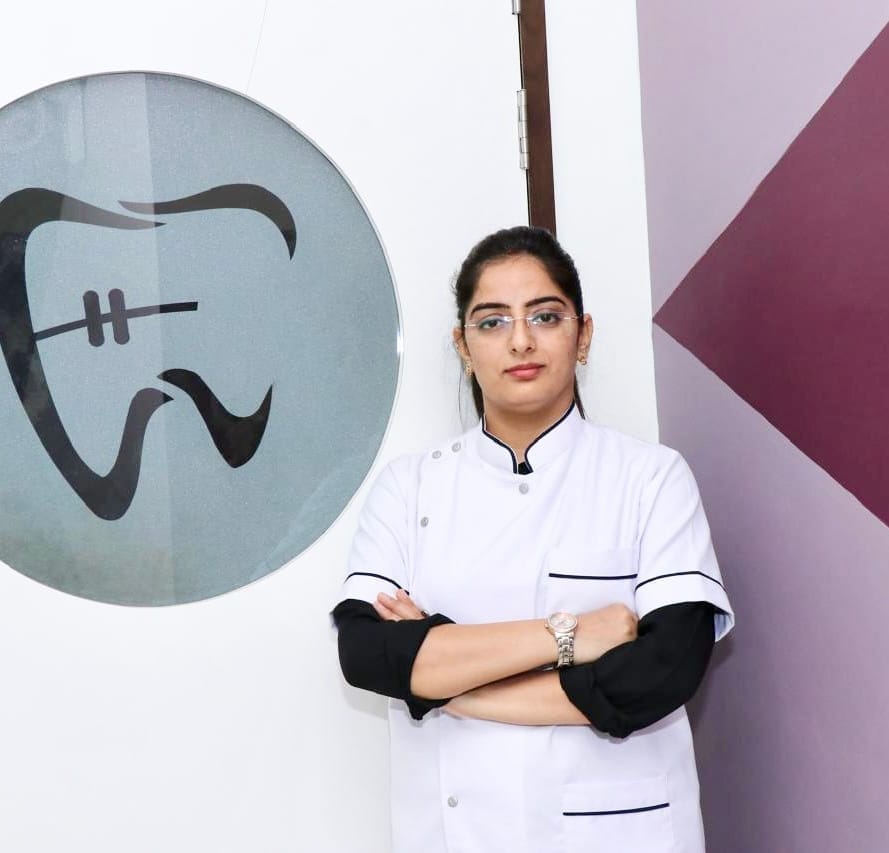
In many cases, yes. This is called an "Immediate Implant." Dr. Ritu will evaluate your bone and infection status to determine if you are a candidate for same-day placement.
Appointment & Treatment Logistics
Same-day CBCT scan and surgical planning available.
Typically 3-4 visits over 3-6 months.
Post-surgical checkup at 1 week, followed by final crown placement.
Explore Related Care
Conditions Treated
Common Problems We Solve
- • Missing a tooth and hate how it looks
- • Dentures keep slipping out
- • Cannot chew solid foods like apples or meat
Related Treatments
Treating Specialist
Prosthodontist & Implantologist
Clinical Technology
- CBCT (Cone Beam Computed Tomography) 3D Imaging
- Surgical Stents for Guided Placement
- Premium Titanium Implant Systems
- CAD/CAM Zirconia Prosthetics